Do you really need 8 glasses of water a day? Build your day and see
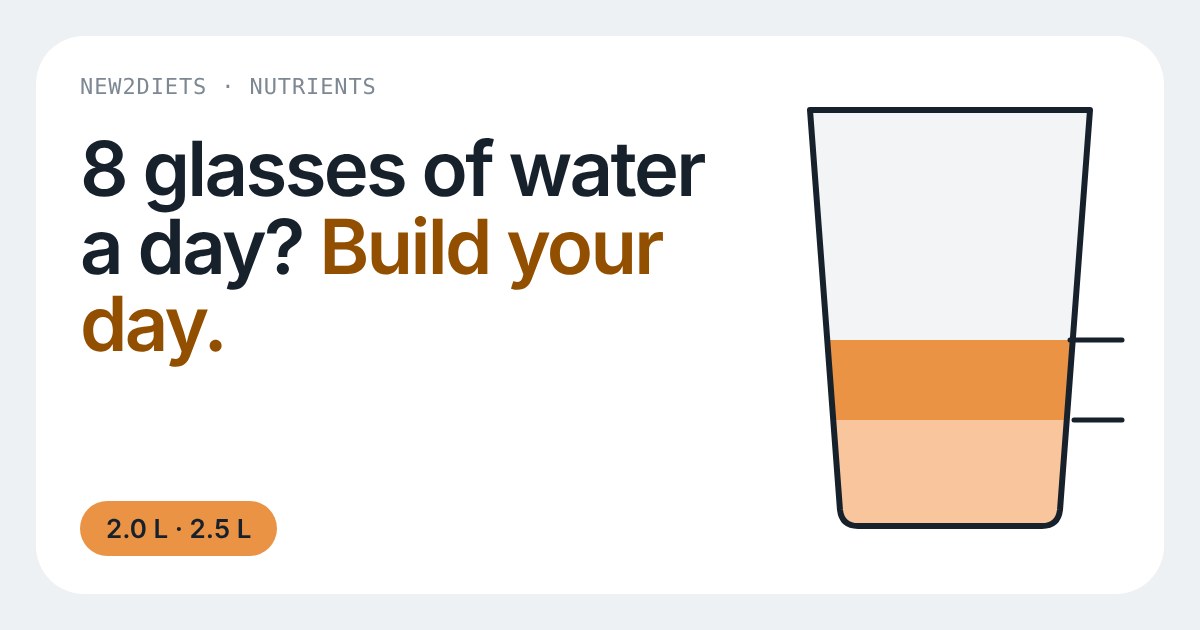
Do you really need eight glasses of water a day? The official advice is looser than that. The NHS says aim for 6 to 8 cups or glasses of fluid, and EFSA gives 2.0 litres (women) and 2.5 litres (men) of total water, which includes the water in your food.
Build a typical day of drinks and see how it lands, which drinks count, and how to tell if you're drinking enough.
Not medical advice: if you have a condition, take medication or have had an eating disorder, talk to a doctor first.
The "eight glasses" idea is a guide, not a rule
Almost everyone has heard that you should drink eight glasses of water a day. The real advice is a bit looser, and a bit kinder. The UK government's Eatwell Guide, which the NHS follows, says to aim for 6 to 8 cups or glasses of fluid a day. In Europe, the European Food Safety Authority (EFSA) gives a figure for total water: 2.0 litres a day for women and 2.5 litres for men. That total includes everything: drinks, and the water that is already inside your food.
What counts toward it
Plain water counts, but so do lower-fat milk, tea, coffee and other lower-sugar drinks, according to the NHS. Food counts too. Fruit, vegetables, soup, yoghurt and cooked grains are mostly water, and sources put the food share at roughly a fifth to a third of the total. So you do not need to reach 2 litres from the tap.
Sugary drinks are the exception to "any drink will do". They add calories without much else, and the NHS suggests keeping fruit juice and smoothies to one small glass (150 ml) a day, ideally with a meal.
Build your day
Pick the figure that applies to you, then slide in a typical day. Each glass or cup here is 250 ml. The food setting is a rough guess, because nobody weighs the water in their dinner.
Thirst and pale urine are better guides than a number. Aim for the figure on most days, not every day.
How to tell if you are drinking enough
The NHS says most people should drink enough during the day for their urine to be a clear, pale yellow. Dark yellow, strong-smelling urine, or peeing less often than usual, can be signs you need more. Other signs of dehydration include thirst, headache, dizziness, tiredness and a dry mouth. Some vitamin supplements can colour urine bright yellow, so the colour check is a rough guide only.
When you may need more
The NHS notes that you may need more fluid if you are pregnant or breastfeeding, in hot weather, active for long periods, or ill with a fever, vomiting or diarrhoea. Babies, children and older adults are more at risk of dehydration, and so are people who rely on others to get their drinks. If you take medicines that affect fluid, such as water tablets, or have a heart or kidney condition, ask your doctor how much to drink, because for some people too much fluid is the risk.
Easy habits that help
- Drink with what you already do. A glass with each meal and one when you get home covers four glasses without thinking.
- Let food do some of the work. A bowl of soup, fruit or a salad adds fluid and nutrients.
- Keep water in sight. A jug on the table or a bottle in your bag is a cue, not a target.
- Watch the liquid calories. Water, tea and coffee without sugar add none.
A note on health
This guide is general information, not medical advice. If you have a condition, are pregnant or breastfeeding, have or have had an eating disorder, or take medication, especially for blood pressure or diabetes, talk to a doctor or dietitian about how much to drink. Seek urgent help if you feel confused, very drowsy, or are not passing urine.
Sources
- NHS: Water, drinks and your health (6 to 8 cups or glasses of fluid; which drinks count; 150 ml juice and smoothie limit; pale urine)
- NHS: Dehydration (symptoms, higher-risk groups, when to get help)
- EFSA: dietary reference values for nutrient intakes (2.0 L for women, 2.5 L for men, total water); full opinion: EFSA Journal 2010;8(3):1459
- Buxton: Hydration FAQ (summarises EFSA; food supplies roughly 20–30% of total water, a secondary source we could not check in the original opinion)