Do you really need eight glasses of water a day? Add up your day and see
Do you really need eight glasses of water a day? Public health bodies give a total water figure, and a good part of it comes from food, not just drinks.
Add up your day of drinks, pick your group, and see how it compares with the European reference. Plus when thirst and pee colour are a better guide than counting, and when to ask a doctor.
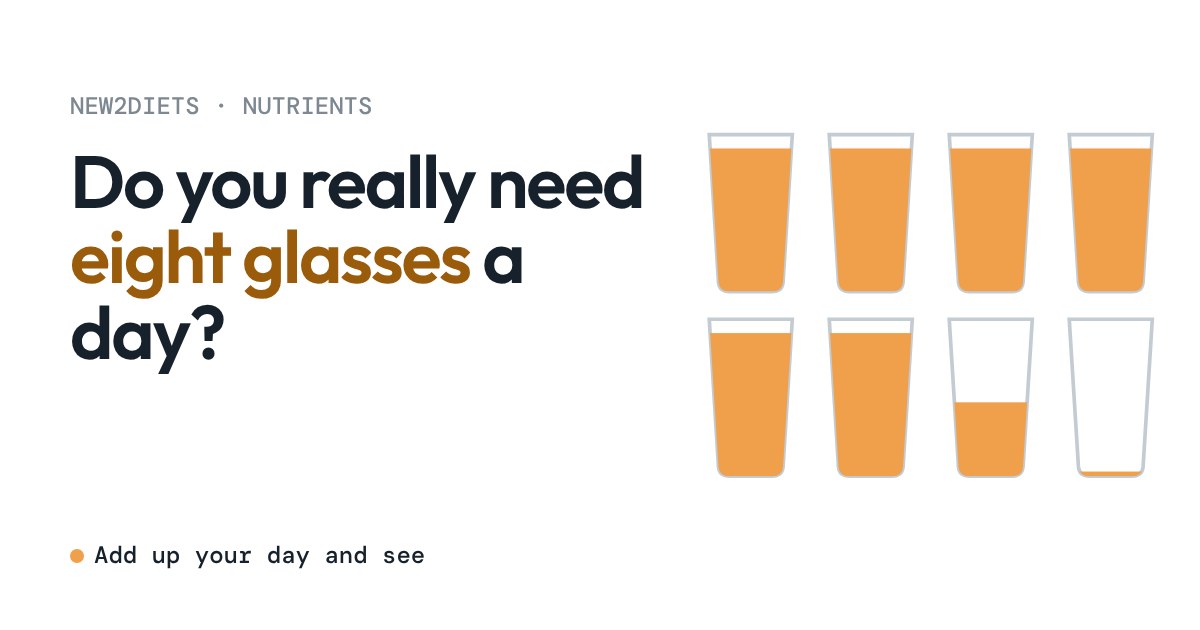
Do you really need eight glasses a day?
"Drink eight glasses of water a day" is everywhere, but it is a rule of thumb, not a law. Public health bodies set a figure for total water: everything you take in from drinks and from food. Soup, fruit, vegetables, yoghurt and bread all carry water too.
The European Food Safety Authority (EFSA) calls 2.0 litres a day adequate for women and 2.5 litres for men. EFSA assumes about a fifth of that comes from food, so drinks only need to cover the rest: roughly 1.6 litres for women and 2.0 litres for men. That is about 6 to 8 glasses, which is where the old rule comes from. NHS hospital guidance gives the same 1.6 to 2 litres of fluid.
Why the number is soft
EFSA's figure is an adequate intake: a level that looks enough for healthy adults in a temperate climate, not a target everybody must hit. Pregnancy adds about 300 ml a day and breastfeeding about 700 ml. Hot weather, sweaty exercise, illness with vomiting or diarrhoea, and high altitude all push the need up, and no single number covers them.
Your body already has a good alarm: thirst. Healthy adults who drink to thirst and have access to fluids usually stay well hydrated. A simple check is the colour of your pee. NHS guidance describes a pale straw colour as healthy and darker orange or brown as a sign to drink more.
What counts as a drink
Water is the simplest choice, but tea, coffee, milk, plant milks and sparkling water all count in normal amounts. Juice and soft drinks count too, but carry sugar and calories: that is why the water-first habit helps if you are watching energy intake.
Aim for pale pee and drink when thirsty. Skip the pressure to count glasses.
When to ask a professional
This is general information, not medical advice. If you have heart, kidney or liver disease, take medication such as diuretics ("water tablets"), have been told to limit fluids, are pregnant or breastfeeding and feel unwell, or have an eating disorder, talk to a doctor or dietitian before changing how much you drink. Constant extreme thirst or very frequent peeing should be checked by a doctor too. Drinking far more than thirst asks for, quickly, can in rare cases be dangerous, so more is not better.