Are you getting enough potassium? Tap your foods and see
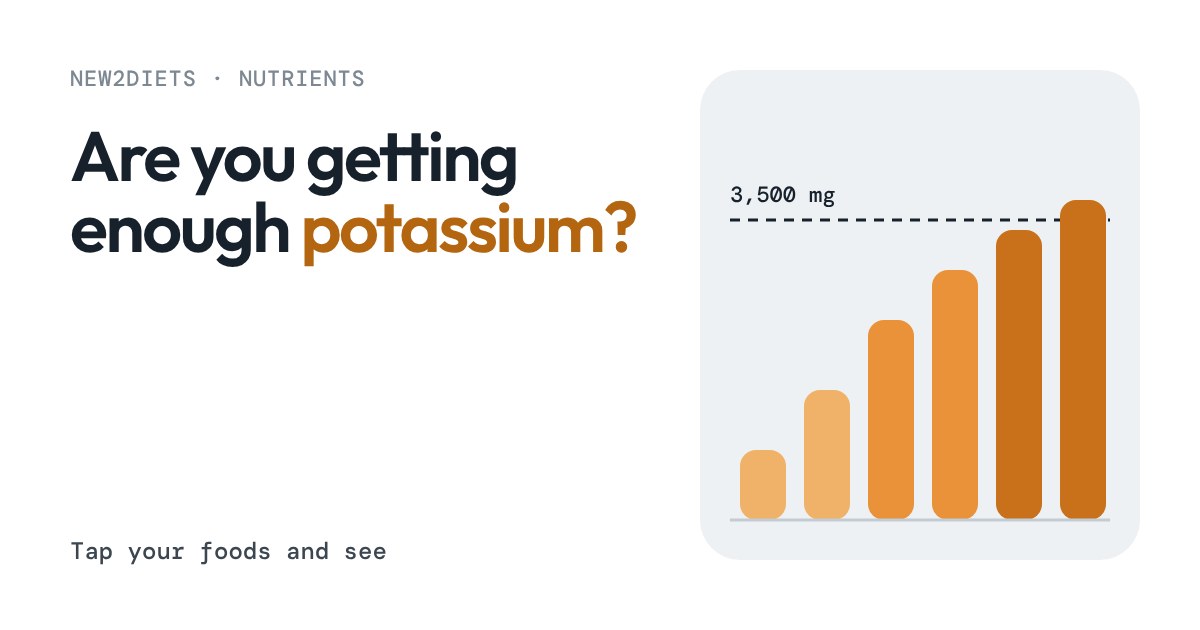
Potassium helps your nerves, muscles, heart and fluid balance, and most of it comes from ordinary plant foods, dairy and fish. Tap through a day of foods and see how close you get to the 3,500 mg adequate intake that EFSA sets for adults, from a pale day of white bread and pasta to a day with pulses, vegetables and fruit.
Also: where potassium hides, how cooking changes it, and who should talk to a doctor first (kidney disease, certain blood pressure medicines, salt substitutes). General information, not medical advice.
What potassium does for you
Potassium is a mineral your body uses every minute. It helps balance fluid in and around your cells, lets nerves send signals, makes muscles (including the heart) contract and relax, and plays a part in keeping blood pressure in a healthy range. You cannot store much of it, so it needs topping up through food every day.
The good news is that it is in almost every whole food. The less good news is that the foods that carry the most are plain ones (potatoes, beans, fruit, vegetables, dairy, fish), while pale, refined foods carry very little. A day built from white bread, pasta and cheese can look full and still come in far under the usual reference amount. Tap your way through a day below and see.
Potassium comes from ordinary plant foods, dairy and fish. A day of pale, refined food can look full and still fall well short.
How much is enough?
The European Food Safety Authority (EFSA) sets an adequate intake of 3,500 mg a day for adults, including during pregnancy, and 4,000 mg a day while breastfeeding. For teenagers aged 15 to 17 it is also 3,500 mg, and for younger children it is lower (for example 1,800 mg for ages 7 to 10). The World Health Organization suggests adults get at least about 3,510 mg a day, and the UK's NHS guidance also uses 3,500 mg.
Two things are worth knowing about that number. First, it is an adequate intake: the amount that looks enough for most healthy people, set because there was not enough evidence to name an exact requirement. It is not a line below which you are ill, and it is not a score to beat. Second, bodies differ, and so do foods, so treat the tool above as an estimate, not a measurement.
Where it comes from
Pulses (lentils, beans, chickpeas), potatoes, leafy and other vegetables, fruit, nuts, fish, milk and yoghurt all contribute. Dried fruit packs a lot into a small handful. White bread, white rice, pasta, cheese and eggs give comparatively little per portion, which is why a day built mainly on them lands low.
Processing and cooking change the picture. Potassium dissolves in water, so boiling vegetables and then pouring the water away loses some of it. Steaming, roasting, microwaving or using the cooking water in a soup or sauce keeps more. Many processed foods also carry less than the whole food they started from, and the WHO notes this too.
- Add a portion of pulses to a meal most days: a few spoonfuls of beans in a salad or lentils in a sauce.
- Keep the potato skin on when you bake or roast.
- Put fruit or a handful of leafy veg in the places you usually have none: breakfast, a snack, the side of a sandwich.
- Swap one refined starch portion for a wholegrain one when it suits you.
Who should not just eat more
For people with healthy kidneys, getting potassium from food is safe, because the kidneys remove any extra. That changes if your kidneys do not clear it well. Too much potassium in the blood (hyperkalaemia) can disturb the heart's rhythm, and it can happen even on a normal diet for some people.
Please talk to a doctor or dietitian before changing how much potassium you eat if you have kidney disease, if you take medicines such as ACE inhibitors, ARBs (for blood pressure or the heart) or potassium-sparing diuretics, or if you are older and your kidneys may be slower. Many salt substitutes are made with potassium chloride, so the same advice applies to them. Potassium supplements are a separate matter again: food is the usual route, and the NHS says older people should not take supplements unless advised by a doctor.
This guide is general information, not medical advice. If you have a condition, are pregnant or breastfeeding, have or have had an eating disorder, or take medication, check with your doctor or dietitian before you change how you eat.