Are you getting enough magnesium? Tap your foods and see
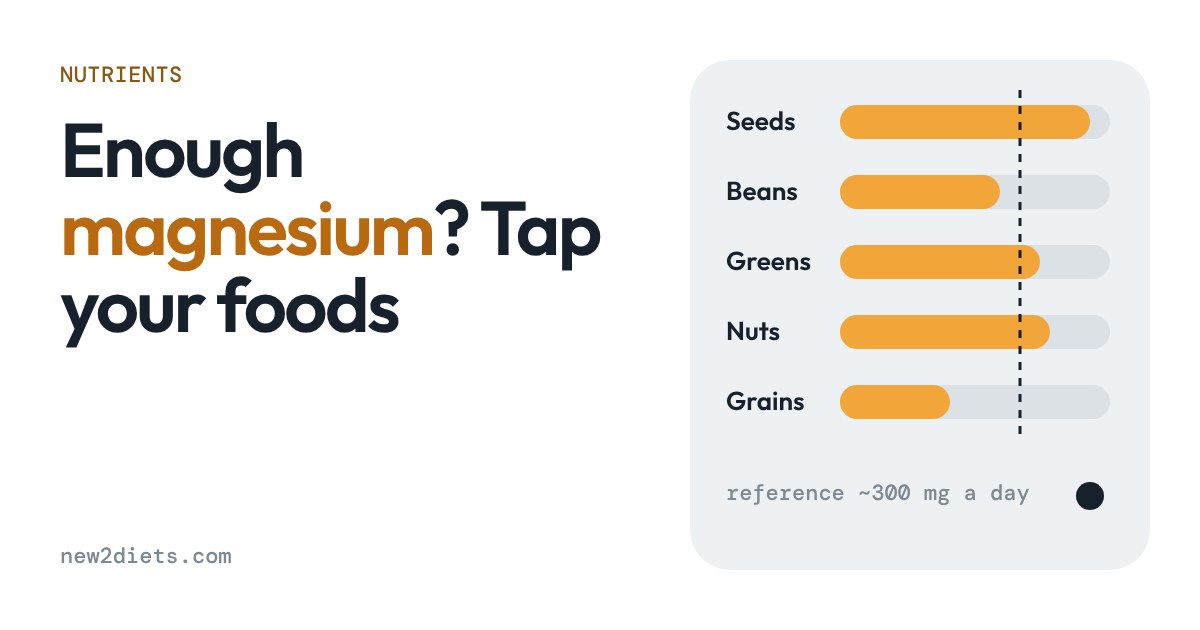
Magnesium helps muscles, nerves and energy release, yet it hides in foods that don't shout about it. Tap what you eat in a day and watch the total build against the European or UK reference.
You'll see which foods carry the most (seeds, beans, greens, whole grains), why a reference is a target rather than a cliff edge, and when to ask a doctor or dietitian instead of guessing. Not medical advice.
Magnesium: the mineral most diets just assume
Magnesium helps your muscles and nerves work, supports normal energy release from food and is part of your bones. You will not find it on the front of many packets, so it is easy to lose track of. This guide shows where it actually comes from, so you can see how a normal day of eating adds up.
How much is enough?
Health bodies do not agree on one number, because the science is not precise. Europe's food safety agency (EFSA) gives an adequate intake of 350 mg a day for men and 300 mg for women. The UK reference nutrient intake is a little lower: 300 mg for men and 270 mg for women. The US recommended allowances are higher again (about 400 to 420 mg for men and 310 to 320 mg for women).
An adequate intake is the amount thought to be enough for almost everyone. It is a target to aim near, not a cliff edge. Eating less than it on one day does not mean you are short of magnesium.
Tap your foods and see
Where it hides
Magnesium sits in the green part of plants (it is the centre of chlorophyll), and in seeds, nuts, beans and the outer layers of grains. That is why pumpkin seeds, chia, almonds, cooked spinach and beans top the list, and why whole wheat bread beats white. Refining grains removes much of the bran, where a lot of the magnesium lives. Milk, yogurt, potatoes and bananas give smaller amounts, but they add up over a day.
A day built on seeds, beans, greens and wholegrains reaches the reference fairly easily. A day built on refined grains and little else often does not.
What about supplements?
Most people who eat a varied diet can get enough from food, and the UK food standards body says the reference intake can usually be met that way. Magnesium in food has no upper limit. For supplements the picture is different: the US sets an upper limit of 350 mg a day, and the UK says 400 mg or less a day is unlikely to cause harm. Both note that high doses can cause diarrhoea. Agencies do not agree exactly, so this guide does not recommend a supplement or a dose.
When to ask a professional
This is not medical advice. Some groups lose more magnesium or absorb less: people with gut conditions such as Crohn's or coeliac disease, with type 2 diabetes, who drink a lot of alcohol, or who take certain medicines such as long-term diuretics. Older adults tend to eat and absorb less too. If that is you, or you have kidney disease, are pregnant or breastfeeding, have or had an eating disorder, or take any medication, talk to your doctor or a registered dietitian before changing your diet or adding supplements. Persistent cramps, tiredness or an irregular heartbeat are reasons to see a doctor, not to guess.
Sources
- EFSA: Dietary reference values for magnesium and phosphorus (adequate intakes of 350 mg men, 300 mg women).
- Food Standards Scotland: Magnesium (UK reference intakes, supplement guidance, food sources).
- US NIH Office of Dietary Supplements: Magnesium fact sheet (recommended allowances, upper limit for supplements, food values, groups at risk).