What counts as low-carb? Build a day and see where it lands
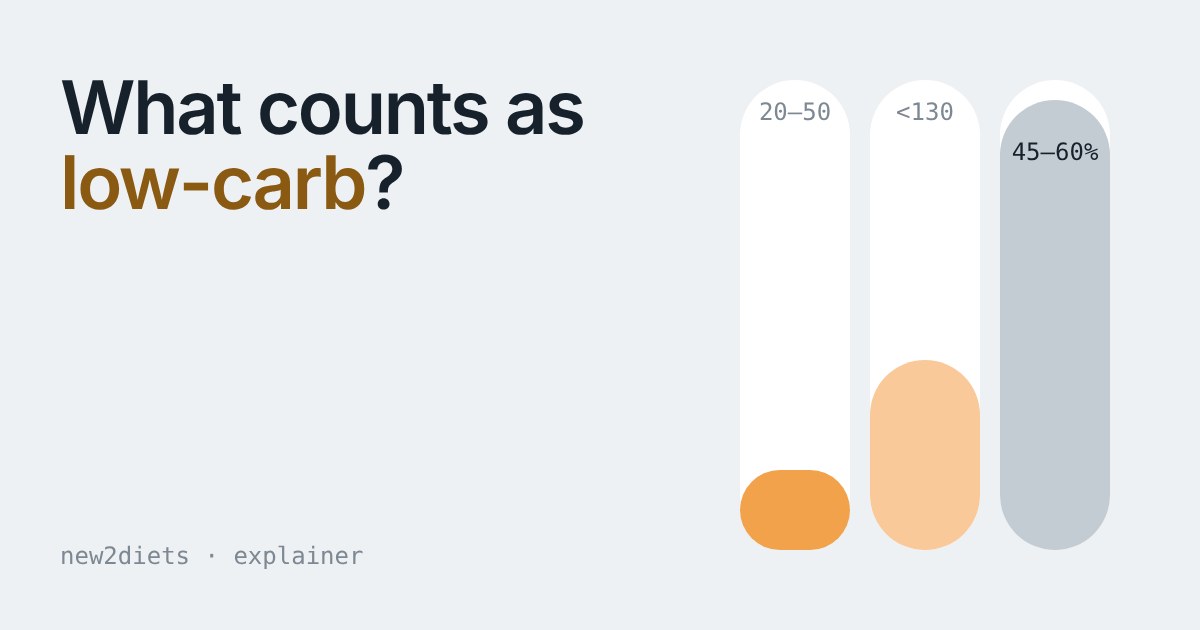
There is no single definition of low-carb. Health services usually say under about 130 g of carbohydrate a day is low-carb and roughly 20-50 g is the very low-carb "keto" range, while European guidance suggests 45-60% of your energy from carbs.
Build a day of eating in the interactive, see where it lands, and read what the evidence does and doesn't show. Not medical advice: ask a doctor or dietitian first if you have a condition or take medication.
There is no single line between "low-carb" and "normal"
Ask five people what low-carb means and you get five answers. Researchers don't agree either: a 2024 review of hundreds of papers found that most trials called a diet low-carb at around 100 g of carbohydrate a day or less, while some used 40–60 g. Health services tend to use two simple bands: low-carb is under about 130 g a day, and very low-carb (the "keto" range) is about 20–50 g a day.
For comparison, European dietary guidance (EFSA) suggests that carbohydrates provide 45–60% of your energy. At 2,000 kcal a day that is roughly 225–300 g of carbohydrate. So even "low-carb" eating is a big step down from the usual advice, and keto is a very big one.
Build a day and see where it lands
Tap the portions you might eat in a day. The numbers are typical values for the portion shown; real products differ, so check labels. Then set your daily energy and see which band you are in.
What does the evidence say?
Low-carb diets can help some people lose weight over the first months, but studies mostly stop at around six months. A 2021 BMJ systematic review in type 2 diabetes found that benefits seen at six months had shrunk by twelve months, and that LDL ("bad") cholesterol had worsened in some trials. In other words, the research is mixed and long-term data is thin, especially for very low-carb diets.
What does tend to matter more than the carb count itself is what replaces the carbs. Swapping sugary drinks and refined snacks for beans, vegetables and whole foods helps on almost any plan. Cutting out fibre-rich foods works against you: EFSA considers about 25 g of fibre a day adequate for adults, and very low-carb eating makes that hard to reach.
Your first week on a lower-carb plate
If you try a gentler low-carb approach, a small step is easier to keep than a dramatic one. Constipation and bad breath are commonly reported with very low-carb diets and are often temporary. A sensible start looks like this:
- Drop the sugary drinks and sweets first; they carry the most carbs for the least food.
- Keep pulses, vegetables, fruit and some whole grains in, and watch your fibre.
- Fill the plate with vegetables, add a protein food and keep portions normal.
- Don't eat below about 1,500 kcal (men) or 1,200 kcal (women) a day, and skip any plan that promises fast results.
Low-carb is a range, not a switch: under about 130 g is "low", about 20–50 g is "keto", and the long-term evidence is still mixed.
Who should talk to a doctor first
This guide is information, not medical advice. If you have diabetes, kidney or liver disease or high blood pressure, are pregnant or breastfeeding, have or have had an eating disorder, or take medication (especially for diabetes or blood pressure), talk to your doctor or a dietitian before cutting carbohydrates. Medication doses can need adjusting, and one NHS hospital trust advises that people with type 1 diabetes should only change carbohydrate intake under dietitian supervision and does not recommend very low-carb diets.
Sources
- EFSA: dietary reference values for carbohydrates (45–60% of energy) and fibre (25 g/day)
- NHS (University Hospitals Sussex): low and very low carbohydrate diets (under 130 g; 20–50 g)
- WebMD: what counts as a low-carb diet (trial thresholds; 2024 review)
- Goldenberg et al., BMJ 2021: low-carbohydrate diets for type 2 diabetes, systematic review