What does a low-carb plate look like? Swap your starch and see the carbs
A low-carb plate is usually the plate you already cook, with one corner changed. Pick your usual starch, swap none, half or all of it for a vegetable, and see how many grams of carbohydrate are on the plate.
These are estimates from food tables, and you don't need to swap anything: public health bodies suggest carbohydrate gives about 45–60% of your energy. This is information, not medical advice.
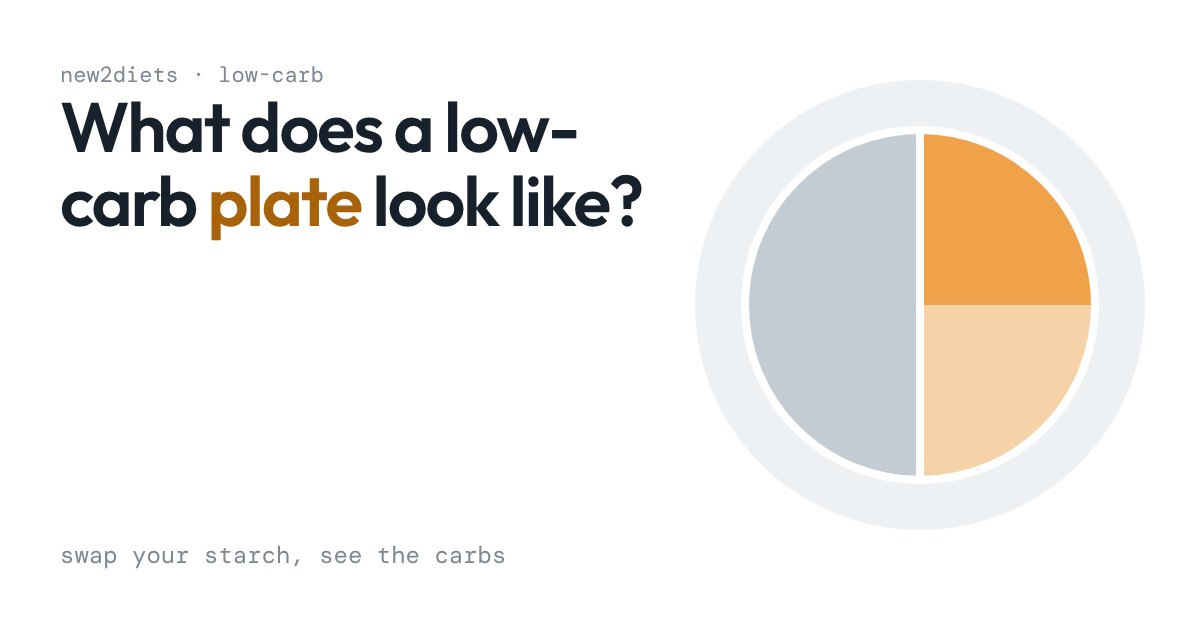
A low-carb plate is mostly a swap, not a subtraction
"Carbs" are the sugars and starches in bread, rice, pasta, potatoes, fruit and milk. On a typical dinner plate, the starchy part, the rice, pasta or potatoes, brings most of them. That is why a low-carb plate usually looks like the plate you already cook, with that one corner changed.
Public health bodies do not say everyone should eat less of them. EFSA, the European food safety agency, suggests carbohydrate gives about 45–60% of your energy, and the NHS Eatwell Guide puts starchy foods at roughly a third of the plate. Low-carb is a choice some people make, and the evidence on it is mixed (see our other low-carb guides). If you are curious, this shows what the swap does in numbers.
Pick your usual starch, then choose how much of it to swap. The rest of the plate stays the same: chicken and 150 g of broccoli.
What the swap changes (and what it doesn't)
Swapping all of the rice for cauliflower rice takes about 35 g of carbs off the plate. Swapping half takes about 18 g. Vegetable swaps also bring fewer calories to the meal, so you may feel hungrier an hour later unless you add protein, olive oil or beans. Beans and lentils are carb-rich but filling, so they are not a "swap" here.
The swap also changes fibre. Rice and pasta bring a little; cauliflower and courgette bring a little too, but nowhere near a day's worth. Whole grains, pulses and fruit are the foods low-carb plans tend to squeeze out, so it is worth checking where your fibre will come from.
You don't need to swap anything. If you do, start with half, and keep the plate full.
Who should talk to a professional first
This is information, not medical advice. If you have a condition, are pregnant or breastfeeding, have or have had an eating disorder, or take medication, especially for diabetes or blood pressure, talk to a doctor or dietitian before cutting carbs. Medicines can need adjusting when your carbs change. Don't cut calories below public minimums to chase a number either.
How the numbers were made
Values are rounded per-100 g figures for cooked rice (about 29 g), cooked pasta (about 31 g), boiled potato (about 19 g), cauliflower (about 5 g), courgette (about 3 g) and broccoli (about 7 g), multiplied by a 150 g portion. Real portions vary a lot; weigh yours once to see.
Sources
- EFSA: dietary reference values for nutrient intakes (carbohydrate 45–60% of energy)
- USDA FoodData Central (food composition values)
- NHS Eatwell Guide