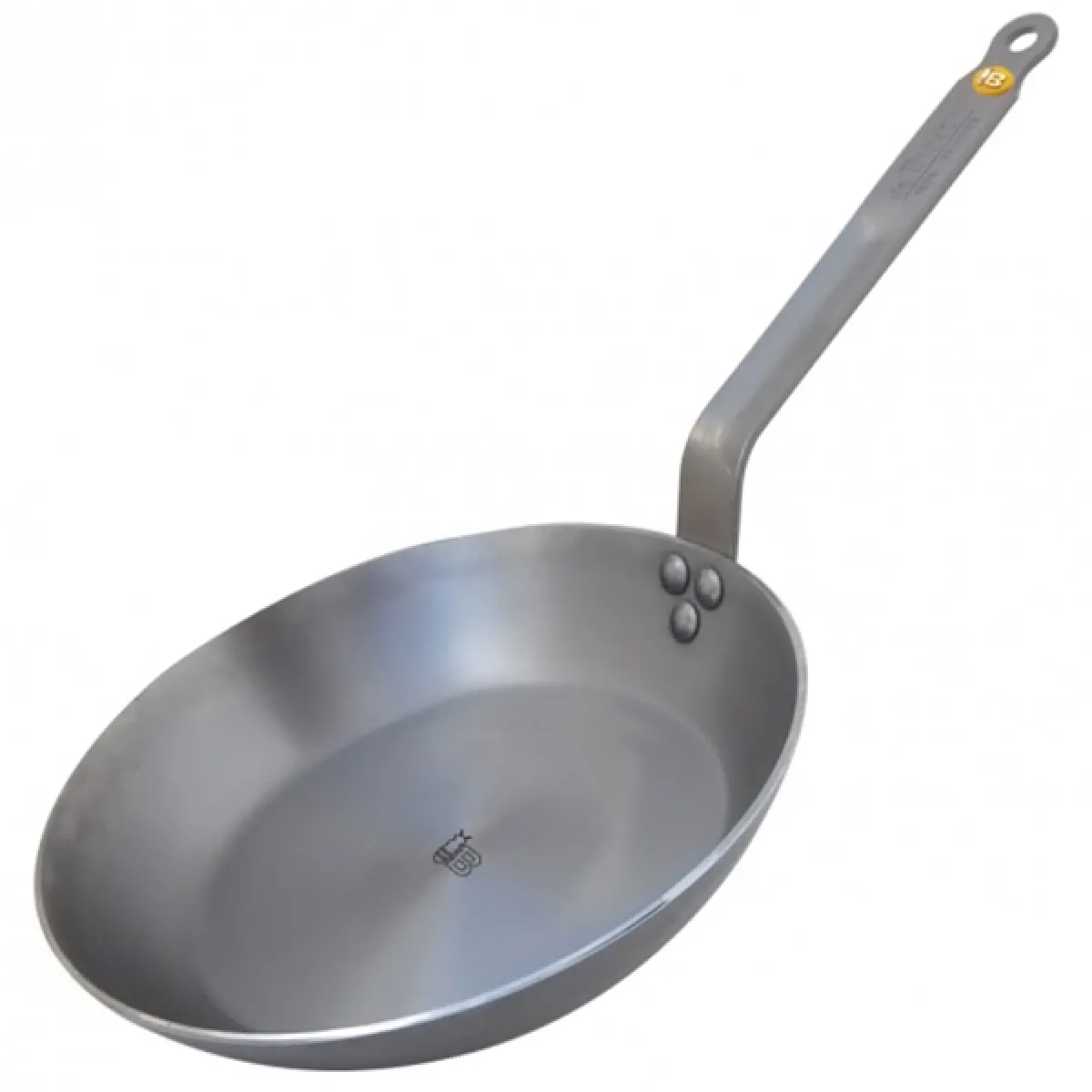
Walk into a kitchen shop and the wall of frying pans looks like a quiz: nonstick, ceramic, stainless steel, carbon steel, cast iron. They all cook an egg. They do not all cook it the same way, and one of them can go wrong if you leave it empty on a hot hob. The good news is that the choice is simple once you know what you cook most.
Pick what you cook and how hot
Choose a food and a heat level. You'll see how each type of pan copes, and where the safe-use rules matter.
The best pan is the one that suits what you cook most, used at the heat it was made for.
What about the nonstick safety worries?
Two worries come up again and again: fumes and flakes. Here is what public bodies say.
Germany's food-risk institute, the BfR, says no adverse health effects are expected from PTFE-coated cookware when it is used as intended. It warns against heating an empty pan, because gas and induction hobs heat quickly, and against holding a coated pan over open flames. A pan with food or water in it is very unlikely to overheat, and smoking oil is your warning. It also says swallowing tiny flakes from a scratched coating is not expected to harm health, since PTFE is inert.
Sources do not agree on the exact temperature where PTFE starts to break down. Singapore's food agency, the SFA, says to keep below about 260 °C, while the BfR puts decomposition higher, at around 360 °C. Either way, normal cooking with food in the pan stays well below both. The practical advice is the same: no empty preheating, no extreme heat, a little ventilation.
The BfR also notes that PTFE is made using fluorinated chemicals, a group called PFAS, and that it has no data of its own on how much of them reaches food. That is one reason some cooks choose uncoated or ceramic pans. The SFA advises replacing a pan once the coating is visibly peeling, flaking or deeply scratched.
Does the pan change what you eat?
A little. A pan that releases food easily means you can cook sticky foods like eggs and fish with less added fat. But no pan removes calories from the oil you do add, and a thin film of oil is still part of good cooking. Pick the pan that makes you want to cook at home; that is the part that matters for eating well. This is general information, not medical advice. If you follow a special diet for a health condition, ask your doctor or dietitian.
What to look for
- Match the pan to your hob. Induction needs a magnetic base, so check the label. A flat base heats evenly.
- Match the pan to your heat. Coated pans for gentle and medium cooking, uncoated pans for hot searing.
- Size. Around 24 cm suits one or two people; around 28 cm suits a family.
- Care you will actually do. Carbon steel needs drying and oiling. Coated pans need soft utensils. Stainless steel forgives almost anything.
Prices vary a lot: around €30–50 for a decent coated or carbon steel pan, and €100 or more for multi-layer stainless steel.
Sources