Does cooking destroy the vitamins in vegetables? Pick your method and see what stays
Does cooking really destroy the vitamins in vegetables? Partly: some nutrients drop while others become easier to absorb.
Pick a cooking method, how long you cook, and whether you use the cooking water, and see how the research points for vitamin C and B vitamins versus carotenoids. Rough guide, not measured values, because results vary by vegetable. Includes the simple habits that help and the sources.
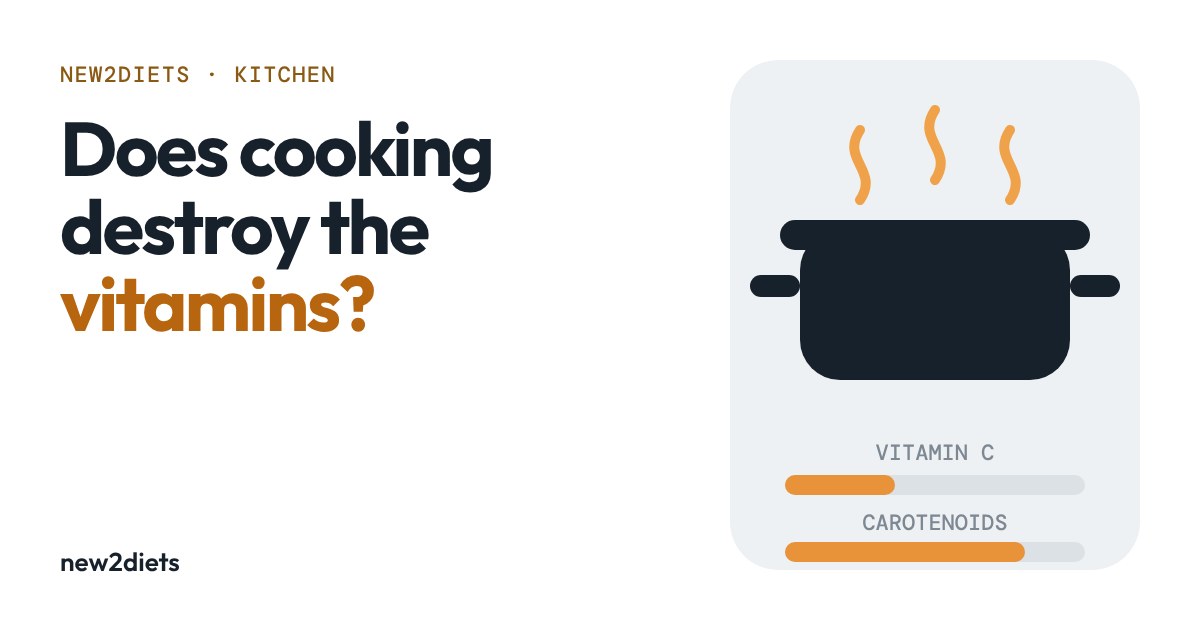
"Cooking kills the vitamins" is one of the most repeated food ideas, and it is only half true. Some nutrients drop when you cook vegetables. Others become easier for your body to use. Which one happens depends on the nutrient, the vegetable and, most of all, how you cook it.
Where do the nutrients go?
Three things change a vegetable in the pan. Water pulls out vitamins that dissolve, mainly vitamin C and the B vitamins such as folate. If you pour the cooking water away, you pour those vitamins away too. Heat breaks down some vitamins, and the longer the vegetable cooks, the more it loses. Softening goes the other way: heat breaks up the tough plant cell walls, which can release carotenoids (the orange and red pigments in carrots and tomatoes) so your body takes them up more easily.
So the useful question is not "raw or cooked?" but "which method keeps what I care about?" Try it below.
What the research says (it is mixed)
A lab study that compared blanching, boiling, microwaving and steaming on leafy vegetables found vitamin C retention ranging from almost none to over 90 percent. Microwaving generally kept the most and boiling the least, but vitamin K and vitamin E results depended on the vegetable. A larger review of more than 100 studies found steaming usually best for preserving plant compounds like polyphenols, while carotenoids often rose after cooking because softening freed them. The same review notes great variability between studies.
The honest summary: no method wins for every nutrient and every vegetable, and the differences are smaller than the "never cook your veg" headlines suggest.
Simple habits that help
- Use less water and a lid, or steam or microwave when you can.
- Stop when it is tender. Longer cooking costs more of the heat-sensitive vitamins.
- Use the water in soup, sauce or gravy so what dissolved still ends up on your plate.
- Add a little fat (a spoon of olive oil) to carrots, tomatoes and leafy greens so carotenoids are taken up better.
- Mix raw and cooked. Each gives something the other does not.
The best way to cook vegetables is the one that gets you to eat more of them. A boiled carrot beats a skipped one.
A note on health
This guide is general information, not medical advice. If you have a medical condition, are pregnant or breastfeeding, have or had an eating disorder, or take medication, talk to a doctor or dietitian before changing how you eat. Some medicines work best with a steady intake of certain vegetables, so ask your doctor if that applies to you.