Low-carb or keto: where is the line? Slide your carbs and see
Is it low-carb or keto? The words get used as if they meant the same thing, but they describe very different amounts of carbohydrate.
Slide a day of carbs from 0 to 300 g and see which label it fits, what share of your energy it is, and what that budget looks like in bread, bananas, potatoes and rice. Based on published definitions and EFSA reference values. Estimates only, and not medical advice.
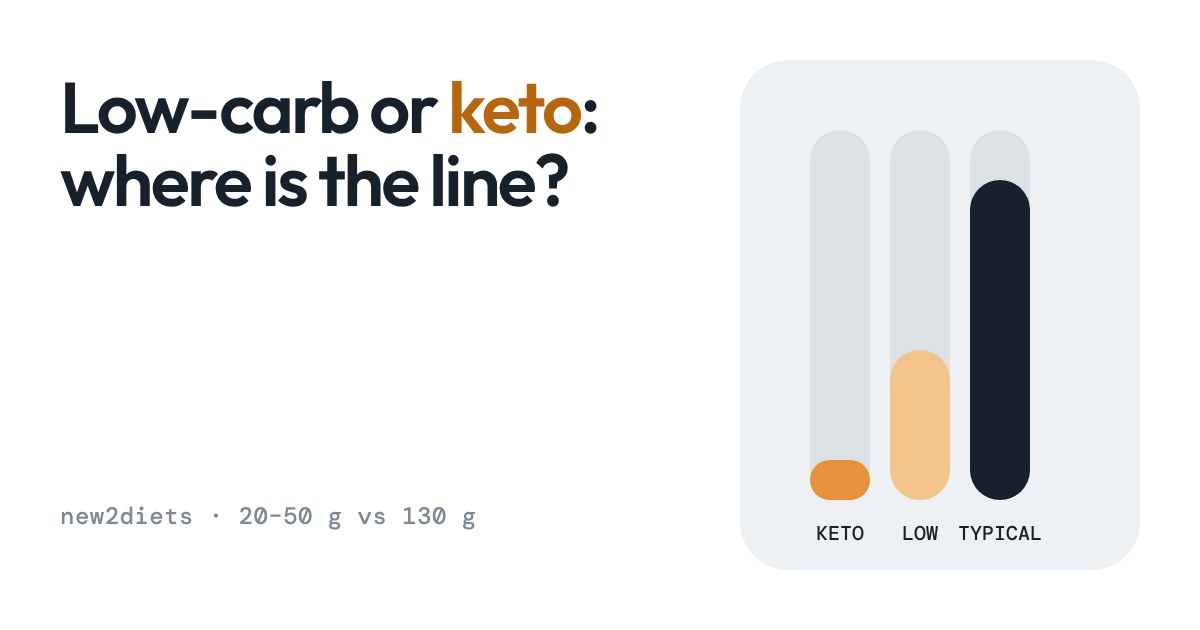
Low-carb and keto are not the same thing
Both mean eating fewer carbohydrates: the sugars and starches in bread, rice, potatoes, fruit, milk and sweets. But "low-carb" is a loose label, and "keto" is a much stricter one. People use them as if they were the same, so it is easy to land on a plan far tighter than you meant to.
Researchers often draw the lines in grams of carbohydrate a day, based on a 2,000 kcal day. Low-carb usually means less than about 130 g. Very low-carb, or ketogenic, means about 20–50 g, under 10% of your energy. The name "keto" comes from ketones, which your body makes from fat when there is very little carbohydrate to use. How quickly that happens differs from person to person, so there is no exact switch.
Move the slider to see where a day of carbs lands, and what it looks like in real food.
Where the lines sit
| Eating pattern | Carbs a day* | Share of energy |
|---|---|---|
| Very low-carb / keto | 20–50 g | under 10% |
| Low-carb | 50–130 g | about 10–26% |
| European reference range | 225–300 g | 45–60% |
*On a 2,000 kcal day. Eat more or less and the same grams are a different share.
Notice the gap in the middle. A lot of people who say they are "low-carb" are actually eating a moderate amount: less than a typical plate, well above 130 g. That is not a problem. It just means the research on strict low-carb diets does not automatically describe what you are doing.
What the research says (and doesn't)
Studies on low-carb and keto eating are mixed. Some people lose weight or see their blood sugar improve in the first months. Over a year or longer, differences between diets tend to shrink once calories are matched, and what mostly predicts success is whether someone can keep going. Very low-carb eating is also harder to fit with fibre: EFSA considers 25 g a day enough for normal bowel function, and bread, fruit, pulses and wholegrains are where much of it comes from.
So neither label is "right" or "wrong". They are tools, and a stricter tool means more to plan around. For more, see what the research found on weight loss and the quick safety check.
Low-carb is under about 130 g a day. Keto is about 20–50 g. Most plates in between are simply moderate.
Before you cut carbs
This guide explains words; it is not medical advice. If you have a health condition, are pregnant or breastfeeding, have or have had an eating disorder, or take medication, talk to a doctor or dietitian first. That matters most for diabetes and blood pressure medicines, which can need adjusting when carbohydrate drops. Very low-carb eating is not a good fit for everyone, and nobody should drop their calories below public minimums to make a plan work.
Sources
- Frontiers in Nutrition (2024): low-carb (under 130 g, about 10–25% of energy) and very low-carb (20–50 g, under 10%) definitions, based on a 2,000 kcal diet.
- EFSA: dietary reference values: carbohydrate 45–60% of energy; fibre 25 g a day for adults.
- USDA FoodData Central: approximate carbohydrate content of the example foods (rounded; values differ between databases and brands).