Do sugar alcohols count as carbs? Read a label and see your net count
A "sugar-free" low-carb snack can still show 20 g of carbohydrate on the back. The difference is usually sugar alcohols such as erythritol and maltitol, which your body absorbs only partly.
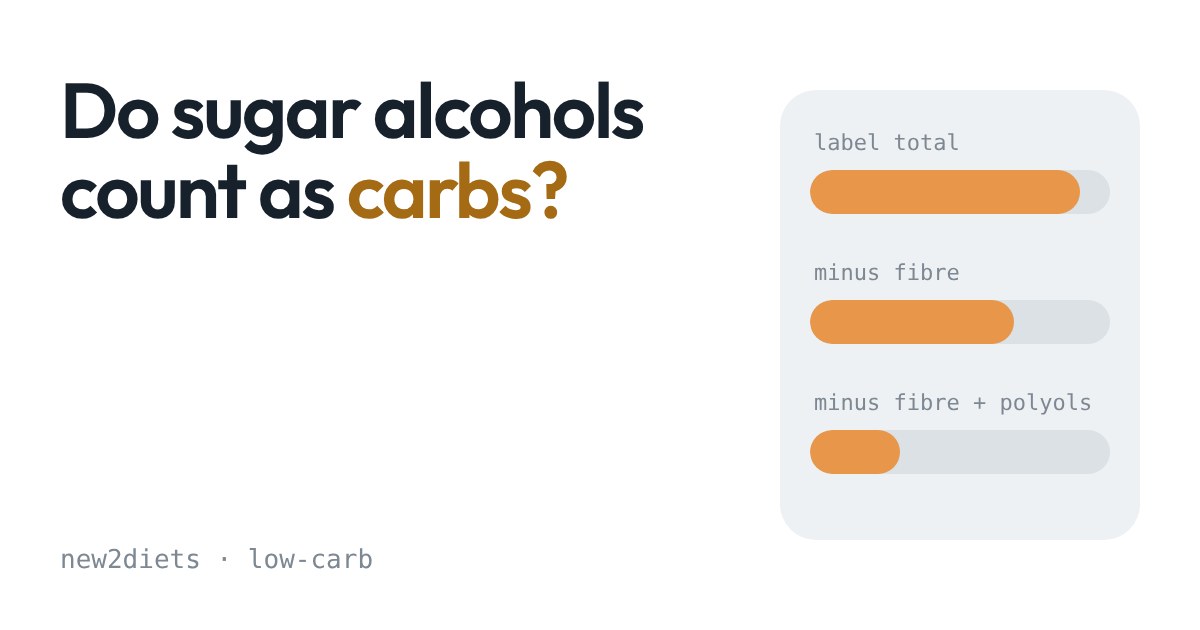
Type in the numbers from a label and see three counts side by side: the label total, minus fibre, and minus fibre and polyols. We cover which polyols move blood sugar, the gut effects, and what the evidence says so far.
Is "sugar-free" the same as carb-free?
You pick up a bar that says "sugar-free" and "low-carb" on the front. Flip it over and the label says 20 g of carbohydrate. Which number do you trust? The answer depends on what the bar is sweetened with, and it is less clear-cut than the front of the pack suggests.
What are sugar alcohols?
Sugar alcohols (also called polyols) are sweeteners such as erythritol, xylitol, sorbitol and maltitol. The name is misleading: they are neither sugar nor alcohol in the drinks sense. They taste sweet, but your body absorbs them only partly, so they give fewer calories than sugar and move blood sugar less.
On an EU label, polyols are counted inside the total carbohydrate figure, and "of which sugars" leaves them out. That is why a "sugar-free" bar can still show a lot of carbohydrate. In the EU, polyols are given 2.4 kcal per gram for the energy figure (sugar is 4), and erythritol is given 0. Outside the EU, labelling rules differ, and "net carbs" is a marketing term rather than a legal one.
Read a label and see your count
Which polyols move blood sugar?
They are not all alike. Erythritol is mostly absorbed and then passed out in urine unchanged, and it has little effect on blood sugar. Maltitol is absorbed more, and reviews of the research find it raises blood glucose more than most other polyols, though still less than sugar. Sorbitol and xylitol sit in between. A bar with a mix of polyols is hard to judge from the label.
The label total is the safe count. Taking fibre off is common practice; taking off polyols is a guess, and the guess is better for erythritol than for maltitol.
Gut effects and a safety note
Polyols that are not absorbed reach the large intestine, where they can cause gas, bloating and loose stools. EU rules require the warning "excessive consumption may produce laxative effects" on foods with more than 10% added polyols. EFSA's 2023 review of erythritol set an acceptable daily intake of 0.5 g per kg of body weight, based on the laxative effect, and found that estimated intakes in some groups could go above it.
Research on long-term effects is still mixed. A 2023 study in Nature Medicine linked higher blood erythritol with more heart attacks and strokes, but that kind of study cannot show cause and effect, and the finding is not yet settled. If you eat a lot of "sugar-free" products, treat them as a treat rather than a staple.
What to do with this
- Start from the label's total carbohydrate, then decide how much you want to take off.
- Take fibre off if you like; keep polyols in your count if you are unsure of the type or if you manage diabetes.
- Try a small portion first and see how your gut reacts.
- Whole foods like nuts, berries and dark chocolate with a high cocoa share often need less guesswork.
This guide is general information, not medical advice. If you have diabetes, a digestive condition, are pregnant or breastfeeding, have or had an eating disorder, or take medication (especially for diabetes or blood pressure), talk to a doctor or dietitian before changing how you eat.