Where do you get vitamin B12 without meat? Tap your foods and see
Plant foods contain no vitamin B12 unless it has been added, so plant-based eaters need to plan for it on purpose.
Tap the foods you eat in a day, set the B12 from your own labels, and see how the total compares with the UK, US and European reference intakes. Includes what "fortified" means, why small and frequent beats big and rare, and when to ask a doctor or dietitian. General information, not medical advice.
Where do you get vitamin B12 without meat?
Vitamin B12 helps your body make red blood cells and keeps your nerves working. It is the one nutrient that plant-based eaters are told to plan on purpose, because plant foods contain none of it unless it has been added. The US National Institutes of Health puts it plainly: only animal foods have B12 naturally. Vegetables, grains, beans, tofu and nuts do not.
That sounds worrying, but the fix is simple once you can see it. Try the tally below: tap the foods you eat in a day and see where you land.
Why it is easy to miss
B12 is made by bacteria, not by plants. Animals get it from the bacteria in their gut or their feed, which is why meat, fish, eggs and dairy carry it. If you cut those out, the only reliable sources left are foods with B12 added, which the label calls "fortified": some breakfast cereals, nutritional yeast, plant drinks, spreads and yeast extracts. The Vegan Society lists these same groups.
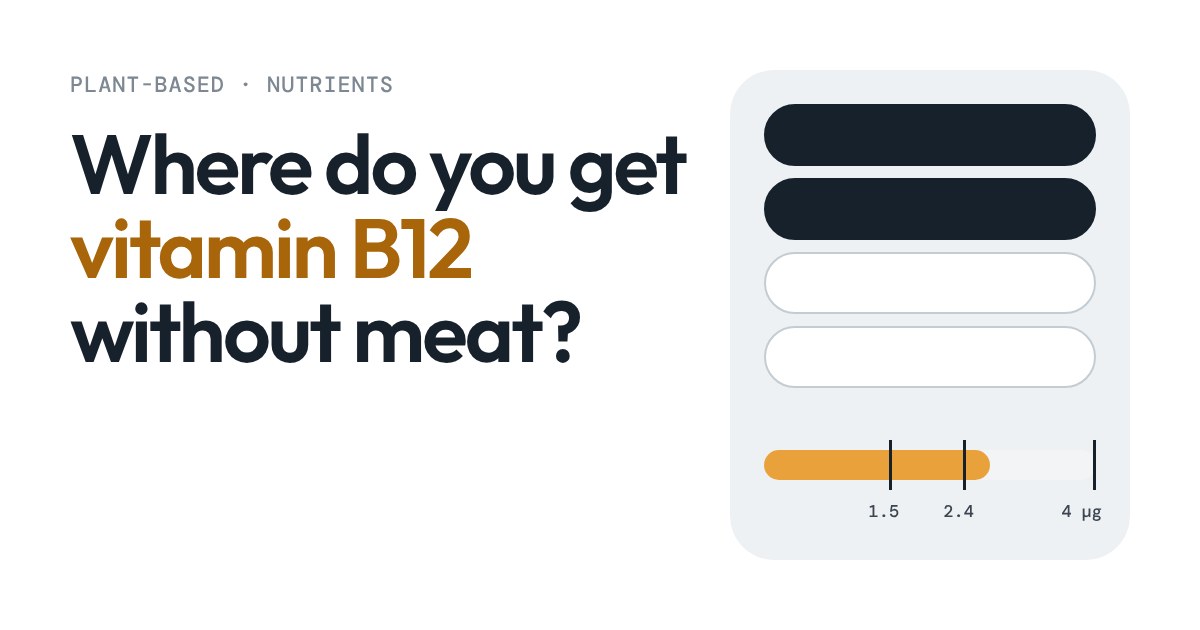
The NHS puts adult need at about 1.5 µg a day. The US figure is 2.4 µg, and EFSA, the European food safety agency, sets 4 µg as an adequate intake for adults. They differ because they use different evidence and safety margins. All three are best read as "aim for roughly this much".
Small and often beats big and rare
Your gut absorbs B12 in limited amounts at a time, so the Vegan Society advises getting it in frequent small amounts rather than one big hit. In practice that means a fortified drink at breakfast, cereal or yeast flakes at another meal, and so on through the day.
Eating dairy or eggs?
Vegetarians who eat dairy and eggs usually get some B12 from them, and the tally above shows how far a glass of milk and an egg go. If you eat them rarely, treat yourself like a vegan for B12 purposes and check your fortified foods.
On a plant-based diet, B12 will not turn up on its own. Look for "fortified" on the label and spread it through the day.
What to look for on the label
- The word "fortified" or "with vitamin B12". It appears in the ingredients list or nutrition panel, sometimes under a name such as cyanocobalamin.
- The µg per serving, not per 100 g. Check which serving the number refers to, then match it to how much you really eat.
- Several fortified foods, not one. Two or three modest sources across the day are easier to keep up than relying on a single one.
- The same brand. Fortification differs between brands and can change, so re-read the label now and then.
When to talk to someone
This guide is general information, not medical advice. If the foods above will not fit your life, a supplement is another route; ask a pharmacist, doctor or dietitian what suits you rather than guessing at a dose. Talk to a doctor first if you are pregnant or breastfeeding, over 50, have a stomach or bowel condition, or take medication such as metformin or acid-reducing tablets, because these affect how much B12 you need or absorb. Tiredness, tingling in hands or feet, or a sore tongue can have many causes, so please do not self-diagnose: ask a GP for a blood test. If you have or have had an eating disorder, talk to a doctor or dietitian before changing how you eat.