Should you wash vegetables before you prep them? Walk through your routine and see
Prepping vegetables on Sunday saves time, but the order you do things in matters: when you wash, how long cut veg sits out, how cold the fridge is, where the box goes and what you cut on.
Walk through your own routine in the checker and see which habits match public food-safety guidance, and which are worth changing. A general guide, not medical advice.
Wash first, or wash later?
You have bought a week of vegetables and you want them ready to grab. The obvious plan is to wash, chop and box everything on Sunday. It feels tidy, but washing is the step people get most wrong. Food safety bodies give simple, practical advice for prepped raw veg, and most of it comes down to five habits: when you wash, how long cut veg sits out, how cold your fridge is, where the box goes and what you cut on.
Use the checker below to walk through your own routine. Nothing is stored, and it only compares your answers with the public guidance.
The five habits, in plain words
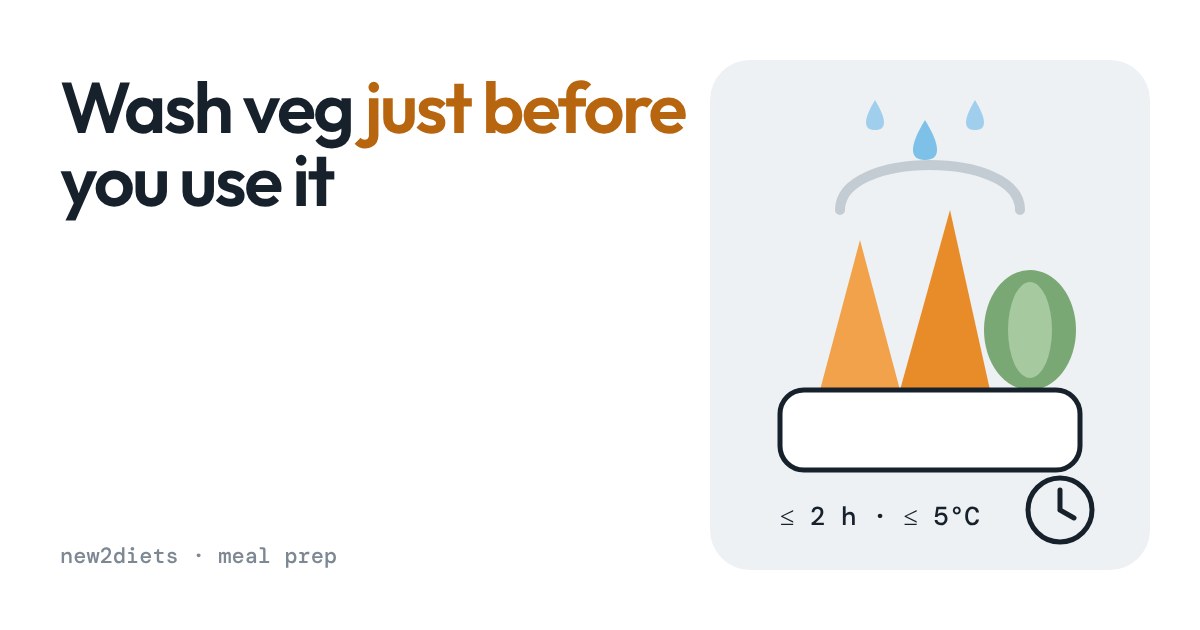
Wash just before you use it
The Virginia Tech food-safety guidance says not to rinse produce before storing it, because extra moisture speeds up spoilage, and to rinse under clean running water right before use. Dry with a clean paper towel. No soap or special produce wash is needed. If you do want a head start, you can chop dry veg now and rinse it when you cook.
Chill cut veg quickly
Sources differ slightly here, and that is fine. NDSU Extension and safefood say cut, peeled or cooked produce should be in the fridge within about 2 hours. Virginia Tech says to discard it if it has not been chilled within 4 hours. A simple rule that satisfies both: chill within 2 hours, and bin anything left out past 4.
Keep the fridge at 5°C or colder
Perishable produce keeps better in a fridge at 5°C (41°F) or below. Fridge dials are often wrong, so a small thermometer is worth having.
Mind the shelf
Store veg in perforated bags or in the drawer, above raw meat, poultry and seafood, so nothing drips onto it. Not everything needs the fridge: whole root vegetables such as carrots do not need chilling according to safefood, and whole potatoes go in a cool, dark cupboard. Once veg is cut, it goes in the fridge.
Use a clean board and clean hands
Wash your hands with soap and warm water before and after handling produce. Use a separate board for fresh produce and for raw meat, poultry and seafood, and wash boards with hot soapy water or in the dishwasher.
Wash just before use, chill within 2 hours, keep the fridge at 5°C or colder, and keep veg above raw meat.
How long does prepped veg last?
There is no single number. The public sources we checked give rules for how it is handled, not a fixed day count for each vegetable, and shelf life varies with the vegetable, its freshness when bought and your fridge. Use the use-by date on bagged salad and anything labelled "keep refrigerated". For loose veg, go by what you see and smell: slimy, mouldy or off-smelling veg goes in the bin. The UK government's home food fact checker also notes that veg past its best-before date can be wrinkly or soft but is fine if there is no rot or mould.
When in doubt, throw it out. A few pence of veg is never worth a stomach upset.
Who should take extra care
Pregnant people, older adults, young children and anyone with a weakened immune system are more at risk from foodborne illness. If that is you, or you have a medical condition or take medication, follow the advice of your doctor or dietitian, and check local guidance on raw produce. This guide is general food-safety information, not medical advice.