Why does hunger come in waves? Move your meal times and watch it pass
Hunger is not a fuel gauge that only goes down. It rises and falls in waves, and a good part of the rhythm follows the times you usually eat.
Move your meal times, then compare eating on schedule with waiting it out to see the shape of a hunger wave. It is an illustrative sketch, with the evidence explained plainly and who should not skip meals.
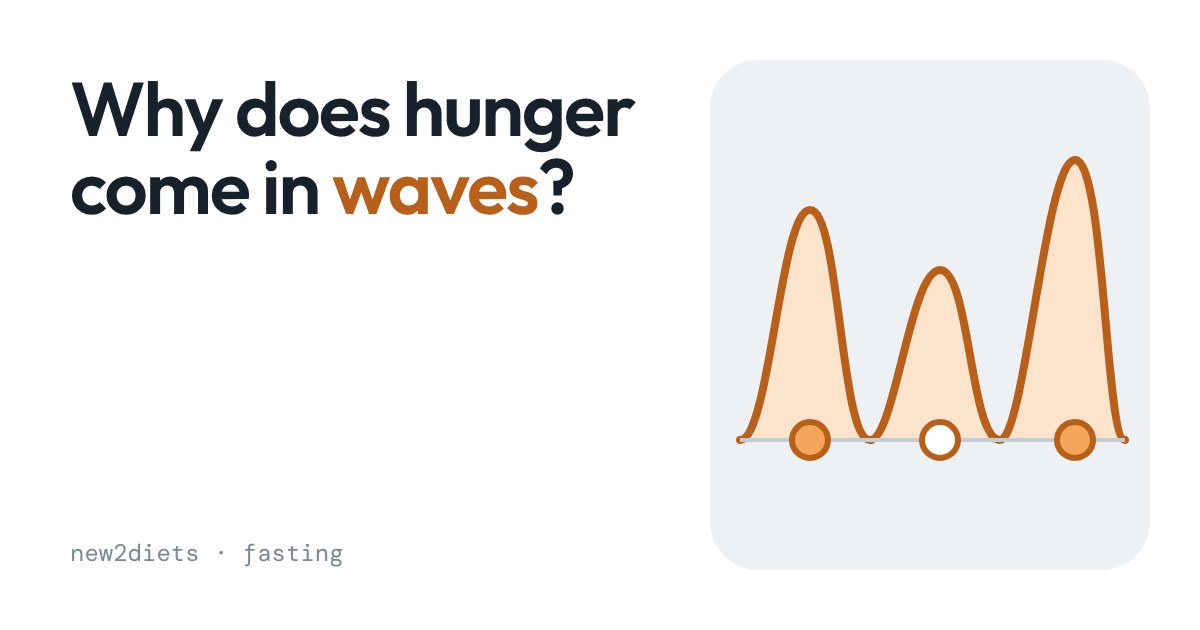
You are fine at 11:30, ravenous at 12:30, and then, if something gets in the way of lunch, oddly fine again at 14:00. Hunger is not a fuel gauge that only goes down. It behaves more like a tide, and knowing that makes a first fasting window (or just a late lunch) much less scary.
Hunger follows habit, not just an empty stomach
Ghrelin is a hormone made mostly in the stomach that nudges appetite upward. It tends to rise before meals and fall after eating. The interesting part is that the rhythm is partly learned. In a small pilot study of six healthy adults who were kept fasting for 24 hours, ghrelin still rose and fell at the times people normally eat, even though no food arrived. The authors read this as a sign that the brain, not just the stomach, helps set when hunger shows up.
That study is tiny, so treat it as a clue rather than a rule. The evidence is also mixed: in an 8-week trial of alternate-day fasting in adults with obesity, ghrelin rose during fasting but hunger ratings were not linked to it. Hunger is also shaped by sleep, stress, the smell of food, what you ate last time and who is sitting next to you.
Hunger often arrives on a schedule you trained, so a first wave at your usual meal time is a habit talking, not an emergency.
What helps while you ride it out
If you are trying a longer gap between meals, a few plain things make the waves easier to live with. None of them is a trick, and none is a substitute for eating when you need to.
- Drink something. Water, tea or black coffee. Thirst and hunger can feel alike, and dehydration is one of the common pitfalls of fasting.
- Shift gradually. Moving a meal by 30 minutes every few days gives your routine time to catch up, instead of fighting it all at once.
- Make the meal before the gap count. Protein, fibre and some healthy fat tend to keep you fuller for longer than a sugary snack does.
- Do something else. Hunger is partly attention. A walk or a task you care about can take the edge off, though food smells will bring it right back.
- Eat when you really need to. Dizziness, shakiness, a pounding headache or feeling unwell mean it is time for a meal, not for willpower.
Who should not do this
Everything above is general information, not medical advice. The NHS advises that people with a history of eating disorders, people who are pregnant or breastfeeding, and people with diabetes should not delay or skip meals, and that anyone on medication should speak to their GP team before changing how they eat. If any of that applies to you, or you are under 18, talk to a doctor or dietitian first. Skipping meals is also not a way to "make up" for eating more earlier, and a pattern that leaves you thinking about food all day is not working for you. Fasting is one option among many, and eating regular meals is a perfectly good way to eat well.
Sources
- Spontaneous 24-h ghrelin secretion pattern in fasting subjects: maintenance of a meal-related pattern (pilot study, six adults)
- Live Science: why hunger subsides when ignored, which summarises a 2016 Clinical Nutrition study of alternate-day fasting where hunger was not related to ghrelin
- NHS (My Health London): intermittent fasting